From Karachi to Harvard: How English is fueling South Asia’s quiet revolution
By Maheen Mustafa
A young girl, Aisha, once traced the English alphabet in the dust in the narrow alleys of Karachi’s Orangi Town, the world’s largest informal settlement. Her father was a day laborer earning less than $200 a month, so school was a distant dream for her, but with fire in her eyes and a borrowed radio tuned to BBC broadcasts, she clung to words like lifelines: hope, horizon, Harvard.
Today, at 28, she pores over policy papers not in some dim corner of Pakistan, but at the sunlit halls of Harvard University, a Rhodes Scholar unraveling the knots of global inequality. “English wasn’t just a language,” she says in the book. “It was my key out of invisibility.”
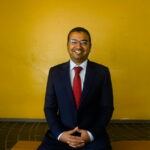
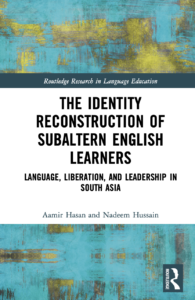 Aisha’s story exemplifies the core message of The Identity Reconstruction of Subaltern English Learners: Language, Liberation, and Leadership in South Asia, a compelling 2026 Routledge release by Aamir Hasan and Nadeem Hussain.
This book highlights how English can serve as a tool for social justice, weaving together powerful narratives from a decade of fieldwork across six nations: India, Pakistan, Bangladesh, Nepal, Afghanistan, and Sri Lanka.
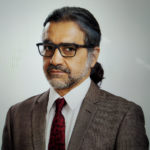
Hasan, a Harvard-trained educator with a PhD from Western Michigan University, and Hussain, a public policy doctoral candidate at UMass Boston who’s penned bestsellers on Pakistan’s fractured economy, trudged through rural backwaters and urban sprawls, amplifying voices long muffled by caste, class, and colonial ghosts.
The book serves as a beacon of hope amid South Asia’s linguistic apartheid, showing that English—once the whip of empire—has become a tool of self-determination for the subaltern, inspiring the audience to see possibilities for change. Hasan and Hussain, both South Asians shaped by the very inequities they dissect, frame this not as romance, but reckoning. They make a compelling case of how mastery of the tongue can result in: competence in the face of chaos, relatedness amid exclusion, and autonomy against apartheid.
Picture Rahim, a boy from Sindh’s parched farmlands in Pakistan, who dropped out of school three times before fate handed him a crumpled Dawn newspaper. Under a tree, he mimicked headlines aloud, bartering cigarettes for grammar lessons from passing truck drivers. ‘I spoke to the wind first,’ he recalls with a wry grin, ‘until it carried me to Boston.’ Now a PhD in environmental engineering, Rahim designs flood barriers to protect his village, inspiring the audience with his resilience.
Or consider Fatima, a civil servant from rural Bangladesh, who met the English alphabet at 12—scratched into the soil beneath a mango tree during monsoon-flooded classes. With no blackboard, just her fingertip and unyielding grit, she clawed her way to the United Nations, where she now champions refugee rights. “Under that tree,” she tells Hasan and Hussain, “I planted seeds of a life I couldn’t yet name.”
These aren’t fairy tales; they’re seismic shifts, documented through intimate interviews that pulse with the authors’ signature blend of empathy and rigor.
The book unveils ‘Liberative Motivation’—that fierce, inner drive among marginalized groups to seize English as a form of resistance and empowerment, challenging systemic inequalities and fostering social change.
In Uttar Pradesh’s dusty hamlets, Meera, a widow’s daughter, hacked open-source TED Talks on a neighbor’s glitchy phone, transforming her grief into grit. Today, she runs a rural incubator, training hundreds in digital entrepreneurship, and her once-shy voice now commands boardrooms.
In Nepal’s rugged Dolakha district, first-generation learner Sita bartered micro-scholarships for English fluency. What started as whispered podcasts evolved into a solar-powered revolution: she led a team electrifying 2,000 households.
These journeys, the authors reveal, aren’t isolated miracles. They are proof of English’s dual edge: a gatekeeper for elites, yes, but a liberator for the rest, fueling intergenerational mobility where family structures, neighborhood tongues, and scant social capital once conspired against it. “English opens doors,” writes Hussain in an op-ed prelude, “but for the subaltern, it rebuilds the self.”
The chorus of acclaimed scholars echoes this urgency. Harvard’s Carola Suárez-Orozco hails it as “groundbreaking and deeply humane,” a lens on how English entwines with dignity in the Global South. Oxford’s Rachel Brooks praises its “wide-ranging account” of language’s entanglement with caste and class, while Columbia’s Hansun Zhang Waring warns policymakers: these “heart-wrenching tales” shatter elitist myths undermining English for mother-tongue piety. Penn State’s Suresh Canagarajah sees subalterns “resisting hegemony from within,” and Georgetown’s Cristina Sanz hears “voices for whom learning English is far more than adding a language—it’s rewriting fate.”
Yet the book dives deeper: Has English become a human right? In chapters like ‘When the Subaltern Speaks in English, She Is Heard!’ and ‘English—the Intersection When Elites and Non-Elites Meet as Equals, ‘Hasan and Hussain dismantle the binary, emphasizing how English can promote linguistic justice by amplifying mother tongues and empowering marginalized voices.
As physicist Pervez Hoodbhoy notes, denying English “betrays the very people we fight for,” locking the vault of wisdom while vitality withers.This isn’t abstract theory; it’s a manifesto in motion, urging decolonial pedagogies rooted in indigenous wisdom.
For educators seeking equitable classrooms, policymakers charting inclusive growth, or dreamers anywhere eyeing the stars, The Identity Reconstruction whispers: Language isn’t power’s monopoly. It’s the lever of liberation. In Aisha’s dust-traced letters, Rahim’s wind-whispered words, Fatima’s tree-shaded ABCs, a truth emerges: When the forgotten speak English, the world must listen—and change.
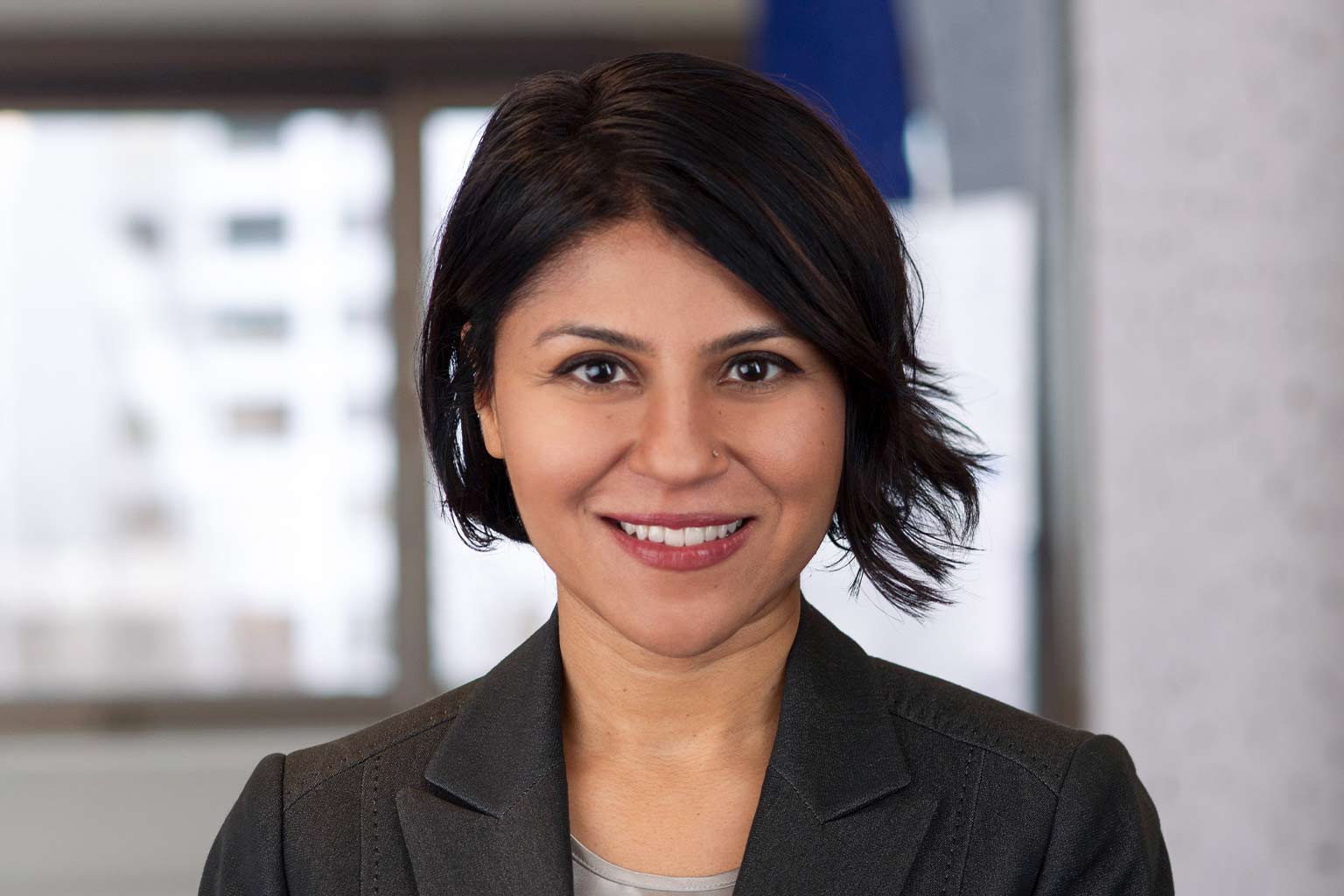
This piece is written by Maheen Mustafa, former director of Committee for Children, a social impact journalist, and founder of MTG—a Seattle-based media outlet and production house dedicated to elevating BIPOC and immigrant narratives through impactful storytelling. She is also the host, director, and writer of the show @TheAmericanSide – Follow her @MaheenM_.